This is the lesson number eleven of the first module of EUPress Teacher Training, relating to the macro topic of “Steering the Euro Across the Crises: (2008-2019) and possible evolutions in the coming future.”
The aim of this lesson is to explore the response of the Member States to the consequences coming from Covid-19 pandemic.
The Covid-19 pandemic marked a turning point in the European Union’s history — not just as a health crisis, but as a catalyst for unprecedented economic, political, and institutional change. While the pandemic exposed vulnerabilities in European governance, it also accelerated a shift toward collective action and shared risk that would have been unthinkable just a few years earlier.
Before the storm: Laying the groundwork for a different response
The years leading up to the pandemic saw a Europe stuck in a status quo of weak investment, political resistance to federalizing reforms, and slow institutional evolution. Yet two developments quietly paved the way for the EU’s bold response to Covid-19:
- Juncker’s Investment Plan (2015–2020): Also known as the “Juncker Fund,” this initiative mobilized over €500 billion for strategic investments, recognizing that Europe’s main economic challenge lay not in monetary policy, but in insufficient private investment. It was a small yet crucial seed for the larger-scale measures that would follow.
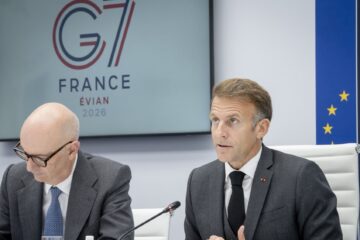
- Macron’s push for citizen participation (2018): French President Emmanuel Macron called for a Conference on the Future of Europe, aiming to rebuild legitimacy from the bottom up by involving citizens directly in shaping EU priorities. Though resisted by traditional institutions wary of empowering public opinion, the conference later produced 49 ambitious recommendations — many bolder than what governments were ready to consider.
These steps hinted at an emerging awareness: Europe could no longer rely solely on top-down governance or fragmented national policies to tackle historic challenges.
The first shockwave: A market in freefall
When Covid-19 hit Italy in early 2020, the EU faced its most dramatic test since the eurozone crisis. The European Central Bank (ECB) was the first to act. On March 12 and 19, 2020, President Christine Lagarde announced the Pandemic Emergency Purchase Programme (PEPP) — an unprecedented bond-buying scheme worth €1.85 trillion.
Key innovation:
- The ECB suspended the “capital key” rule — which previously bound sovereign bond purchases to a country’s share in the ECB’s capital.
- Instead, the ECB bought more bonds from the hardest-hit countries, primarily Italy and Spain.
- This asymmetric intervention broke a longstanding taboo and showed, for the first time, that European monetary policy could target needs rather than follow strict proportionality.
The ECB’s move signaled a simple truth: Europe could not survive this crisis without fiscal and political coordination.
The fiscal shift: From austerity to collective recovery
Lagarde openly urged governments: “Monetary policy alone cannot solve this crisis.” Within weeks, the European Council responded with steps that would have been impossible just months earlier:
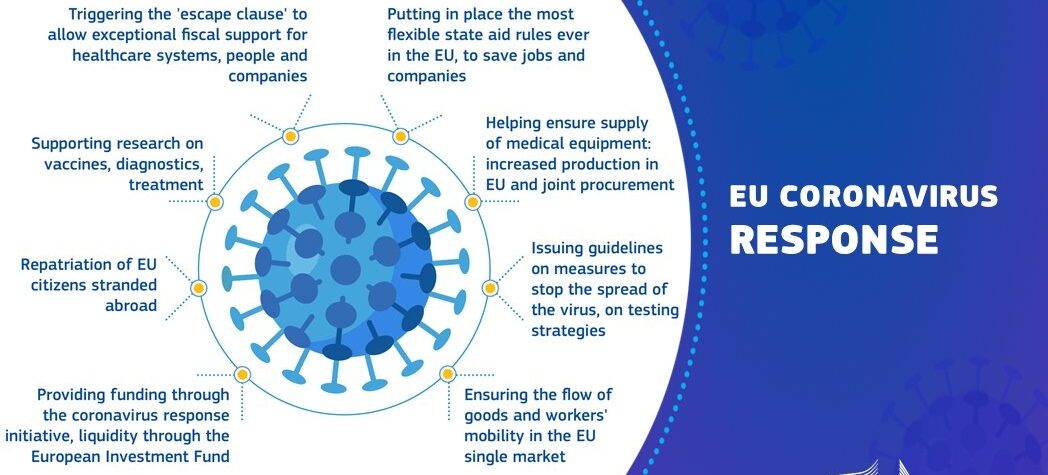
- Suspension of the Stability and Growth Pact, freeing states from deficit limits.
- Creation of temporary support mechanisms, like SURE for worker income support.
- And, most importantly: the birth of NextGenerationEU, the landmark recovery fund financed by common debt, breaking another taboo.
This €750 billion instrument turned the EU into a fiscal actor for the first time — pooling risk and resources to support recovery across Member States, particularly in the south.
A new European political moment — or temporary exception?
The asymmetric shock of Covid-19 forced a rethink of Europe’s macroeconomic framework. The crisis:
- Exposed structural imbalances in healthcare, budgets, and supply chains.
- Showed the limits of relying solely on national budgets to absorb global shocks.
- Sparked renewed debate about own resources and permanent fiscal capacity at the EU level.
Yet the question remains: Will this momentum lead to lasting reform, or will Europe revert to fragmented crisis management once the emergency fades?
Covid-19 did not only test Europe’s resilience — it demonstrated that shared vulnerability can generate shared sovereignty. The pandemic may be remembered not just for the tragedy it unleashed, but for the boldest leap toward integration the EU has made in a generation.